
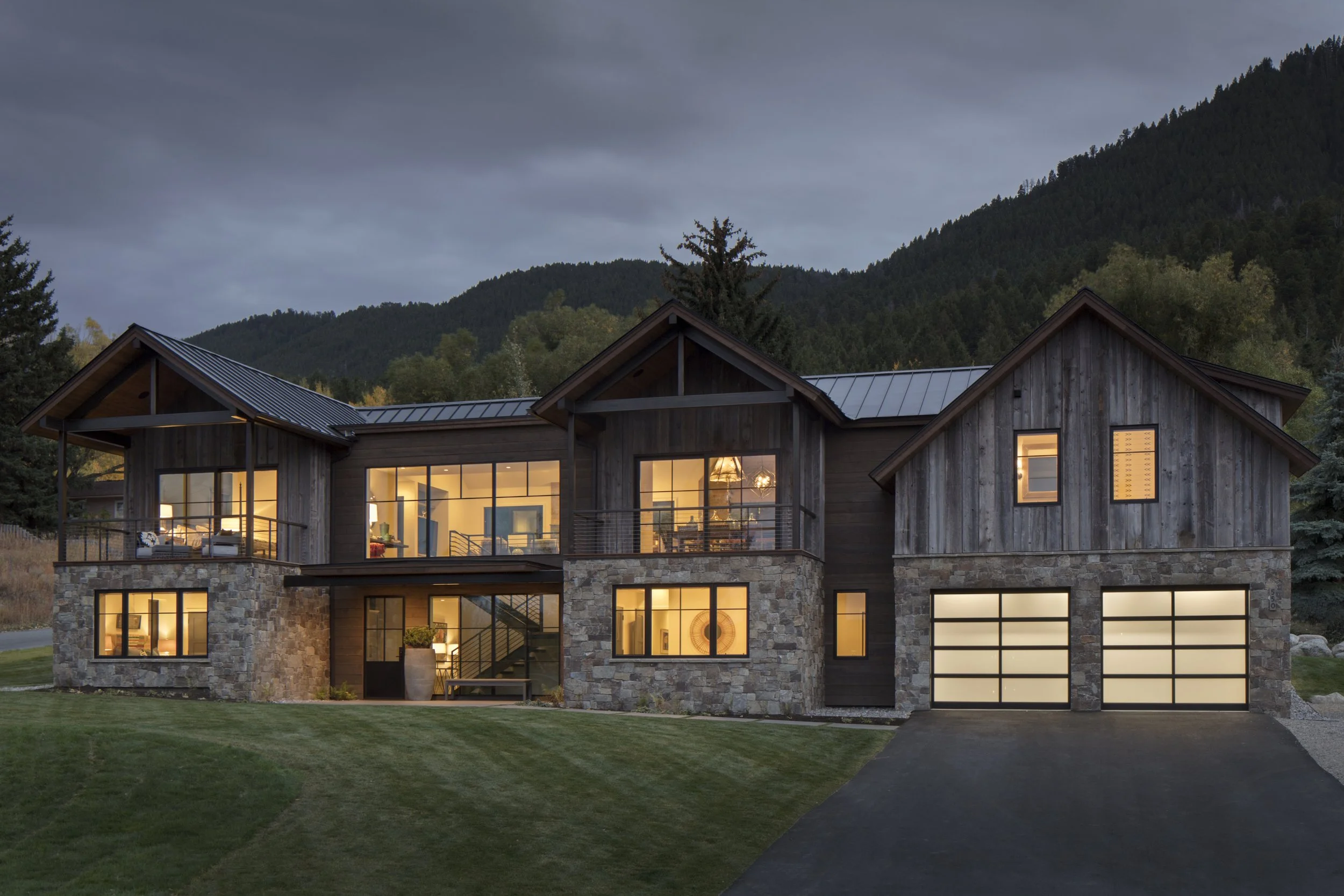
In a place where every site is unique and every client has a different vision, great architecture should feel personal. But truly custom design is often harder to find than people think. To explore what that really means, Chris Jaubert, Principal of A43 Design, and Reed Duggan, Associate and Head of Interiors, shared their unique perspectives on creating thoughtful, one-of-a-kind spaces.
Many projects begin with a familiar framework: a set of go-to details, standard layouts, or a design language that’s been refined and repeated over time. It’s an efficient approach, and in many cases, a successful one. But it can also mean that homes, no matter how beautiful, start to feel similar.
At A43, the process looks different.
Rather than beginning with a formula, each project starts with a question: what does this place, this client, and this moment call for? The answer isn’t predetermined. It’s discovered through collaboration, iteration, and a willingness to challenge assumptions from the very beginning.
“Collaboration is at the core of everything we do. Working closely with both clients and builders to create something truly cohesive,” says Reed Duggan. That collaboration extends beyond the client relationship—it’s embedded within the studio itself and across every phase of a project.
What follows is a closer look at how that philosophy shapes the way A43 designs: integrating architecture and interiors, embracing the advantages of a boutique studio, and approaching every project without a script.
What Does Custom Mean?
Custom is one of the most overused words in architecture and interior design. It’s everywhere on websites, in project descriptions, in client conversations. But in many cases, it doesn’t mean what people think it does.
At A43, that process stays open from the start. Instead of defaulting to a predetermined solution, each project is shaped by the land, the client, and the way the space will actually be lived in. As Principal Chris Jaubert puts it, “Our way of doing things is fluid… we’re always open to exploring new ideas and questioning the status quo.”
That openness is intentional. It creates space for new ideas, new solutions, and ultimately, better design.
“When we say custom, we mean it. Every detail is thoughtfully tailored. From materials and finishes to construction and craftsmanship, each piece is designed specifically for the client. And when the perfect fit doesn’t exist, we create it,” says Duggan.
That level of customization can be highly specific, even down to how a client physically experiences a space. Whether it’s scaling furniture to fit someone’s height or fabricating entirely one-of-a-kind architectural elements, the goal is the same: design that feels truly made for the person living in it.
Starting without a predefined formula is key. As Duggan explains, relying on assumptions too early “limits what’s possible.” Beginning with a blank slate, instead, allows each project to become something entirely its own.
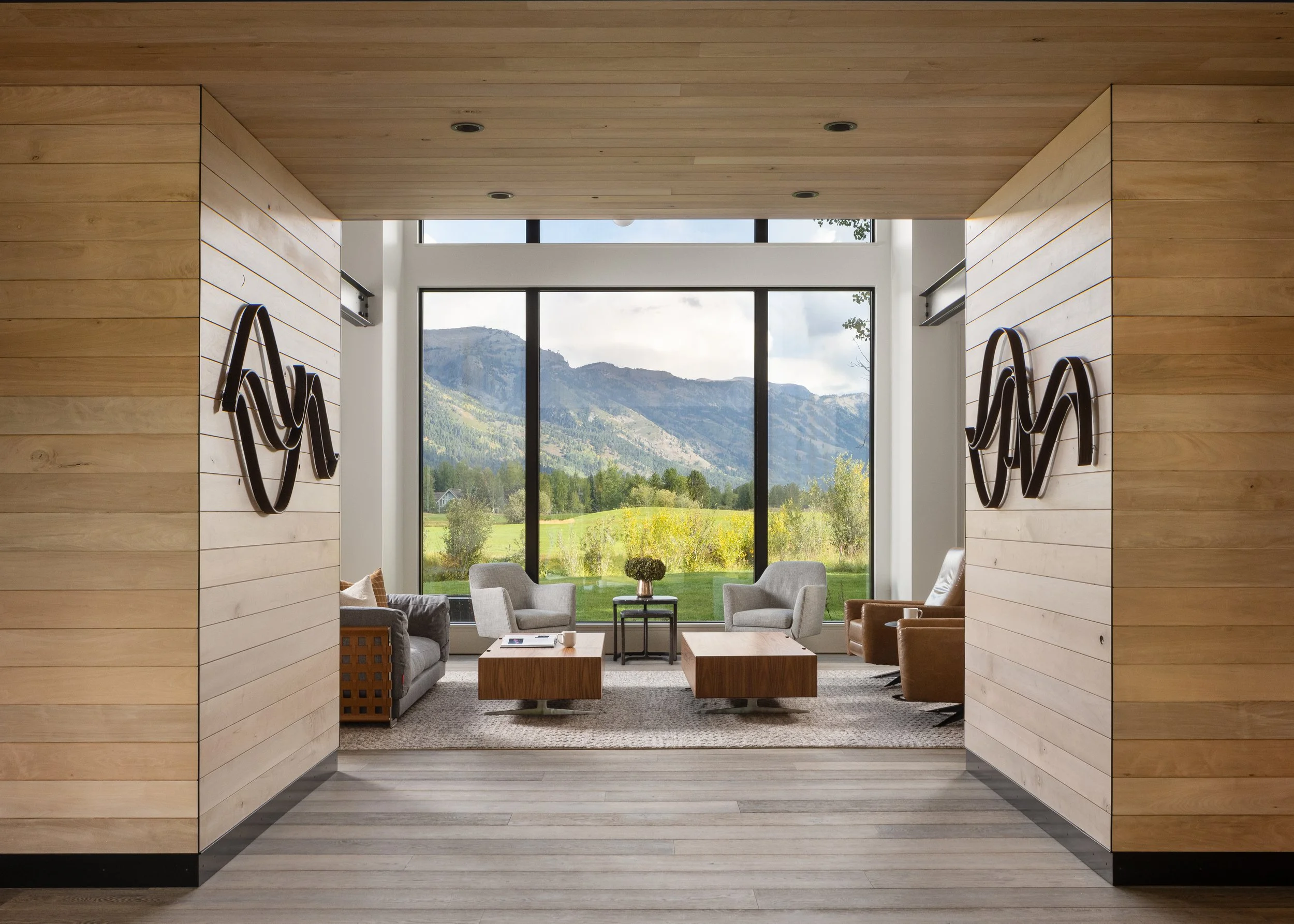
Architecture & Interior Design as One Process
One of the defining aspects of A43 is the integration of architecture and interior design from the very beginning.
Most firms focus on either architecture or interior design, not both. That separation can lead to disconnects: a window that doesn’t quite align with how a room is used, lighting that feels like an afterthought, or materials that don’t fully relate to the architecture.
At A43, those two disciplines evolve together. As Jaubert explains, “the goal is to create continuity so that the architecture and the interiors are both informing one another.”
Rather than trying to fit interiors into a finished structure or vice versa, the team works in real time to refine both simultaneously. An interior idea might influence window placement or spatial layout, while architectural decisions shape how materials, furnishings, and lighting ultimately come together.
“We’re manipulating both at the same time so that they fit together,” Jaubert says.
This integrated approach also streamlines the process. With the team working side by side, ideas can be tested, adjusted, and resolved quickly, eliminating the back-and-forth that often happens between separate firms. The result is a more cohesive and intentional final product.
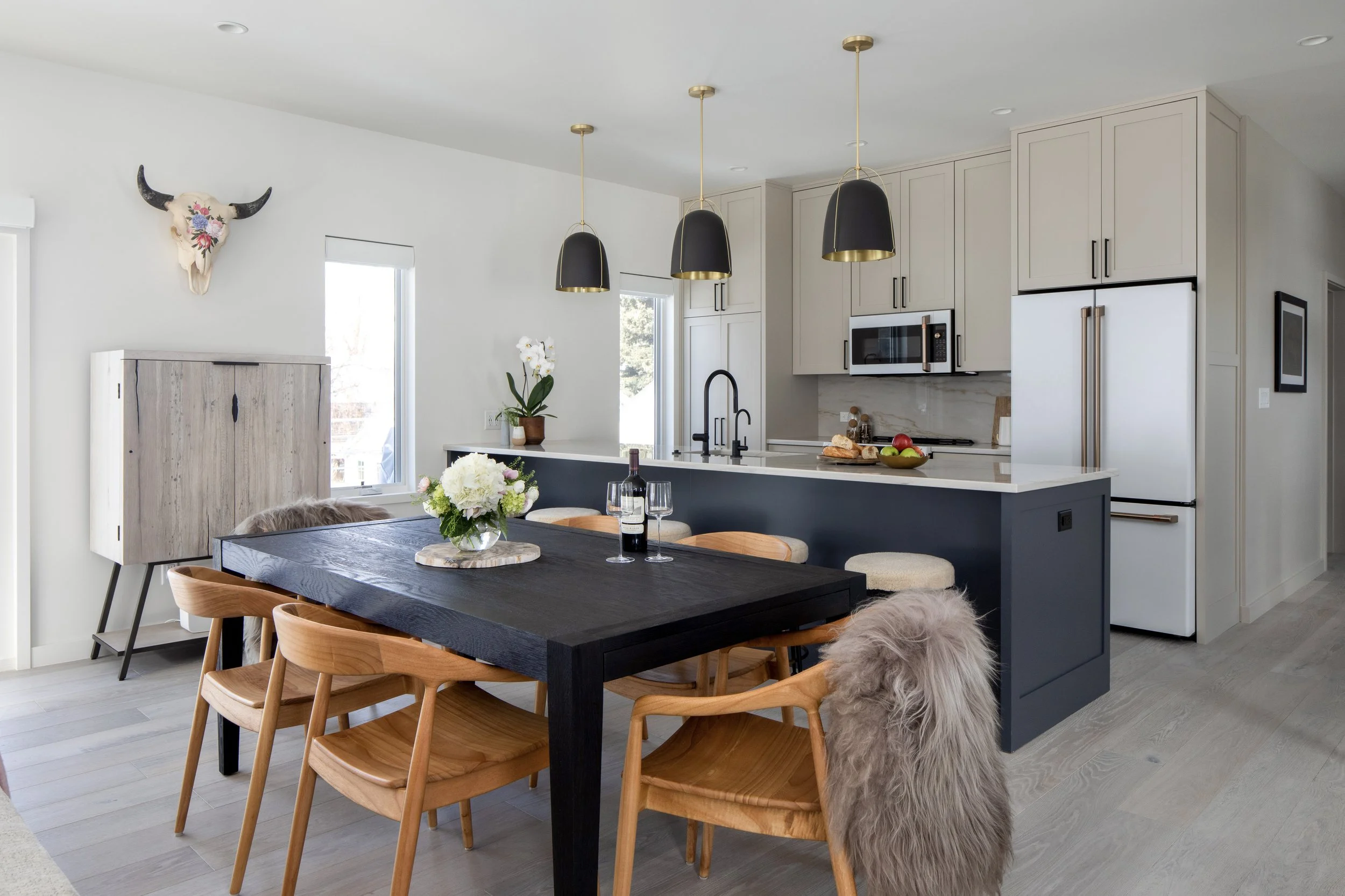
Large Firms vs. Boutique Studios
A43 is intentionally small. And that’s not a limitation, it’s a strategy.
As a boutique studio, the team limits the number of projects they take on, ensuring that each one receives the level of attention it deserves. Clients aren’t passed through layers of staff or handed off between departments. Instead, they work directly with the people designing their spaces.
“You’re getting all of us,” Jaubert says. “We’re all engaged in every single project.”
That level of involvement creates a more personal experience, but it also protects the integrity of the design. Fewer layers mean fewer opportunities for ideas to get diluted or lost in translation.
Duggan, who leads A43’s interiors team, describes it simply: in larger firms, the process can feel like a game of telephone. At A43, communication is direct, collaborative, and constant. Small, in this case, means focused. It means disciplined. And it means every project gets the full attention of the people behind it.
There’s no one-size-fits-all approach to architecture, and larger firms bring their own strengths, particularly when it comes to scale and efficiency. But with that scale often comes structure: established systems, standardized processes, and, at times, reliance on templates that help projects move quickly.
The tradeoff can be originality. At A43, the absence of a rigid system is what allows each project to become something new. Every design is treated as its own challenge, rather than an iteration of something that’s been done before.
There are also fewer steps between the idea and execution. Decisions don’t need to pass through multiple layers before they’re realized. The people developing the design are the same people discussing it with the client, refining it with the builder, and seeing it through construction.
That continuity keeps the original vision intact and often leads to more thoughtful, more refined outcomes.
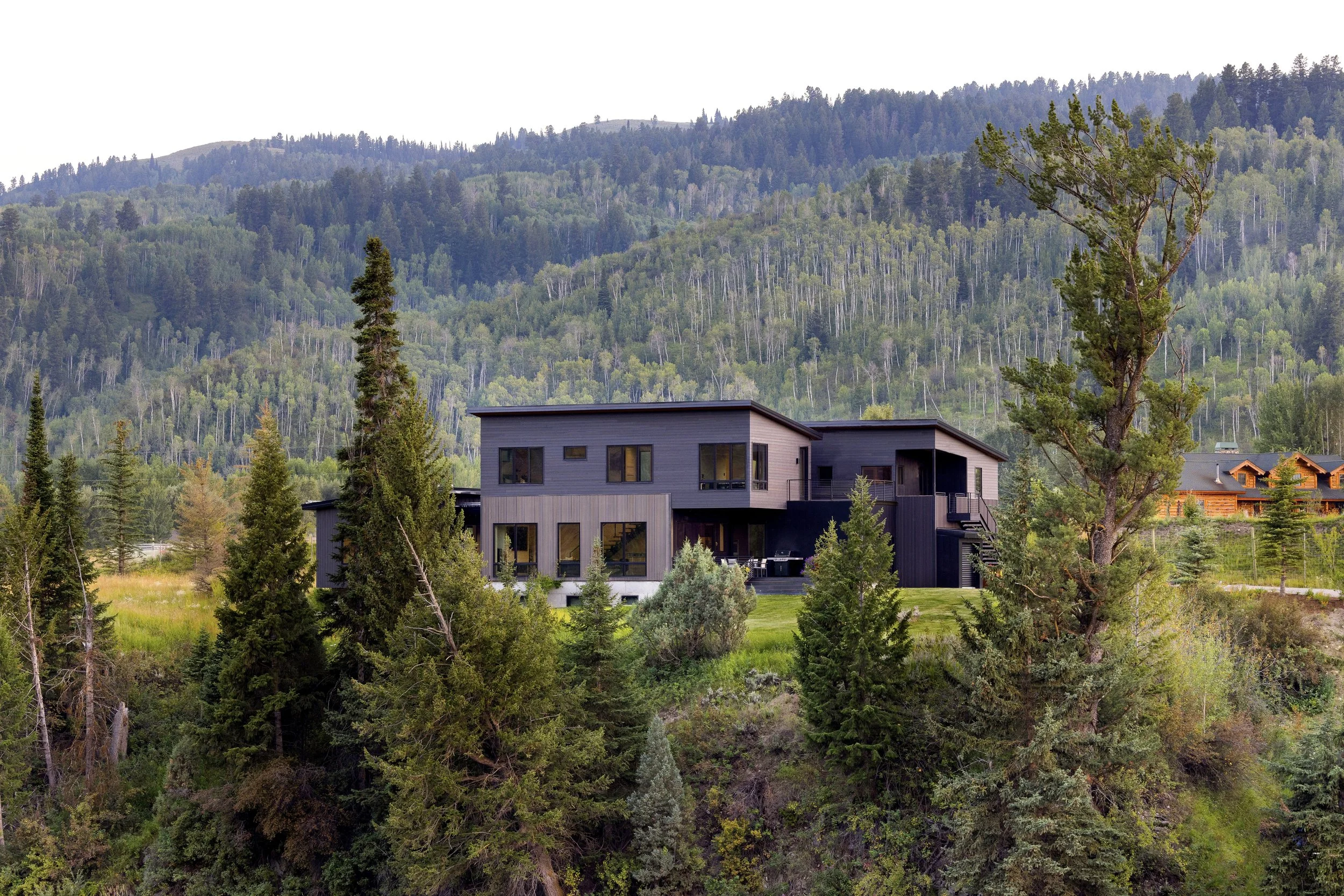
From Idea to Reality
While the design process is collaborative and iterative, its impact becomes most tangible during construction.
For Jaubert, this phase is where everything comes to life. “You can design something that looks great on paper, but seeing it materialize in person—that’s the most rewarding part,” he says. Being on-site, working alongside builders and subcontractors, also creates opportunities to learn, refine, and improve future designs.
That same sense of reward carries through to the final result. For Duggan, the most meaningful moment is simple: “When a client looks at the finished project and says, ‘you nailed it.’”
At every stage, A43’s approach is grounded in a shared goal: to create something that not only works beautifully, but feels right for the people it’s built for. It’s an approach rooted in collaboration, guided by experience, and refined through attention to detail. And while it may take more intention than following a formula, the result is something far more meaningful.
In the end, the best design doesn’t come from repeating what’s worked before. It comes from listening to what’s possible next.